Minimally Invasive Neurosurgery Lahore
One philosophy, applied across the brain and spine: smaller incision, same surgical outcome, faster recovery. An overview of every keyhole and endoscopic technique Dr. Waqas Mehdi offers in Lahore, Pakistan.
What is Minimally Invasive Neurosurgery? A Philosophy, Not a Single Procedure
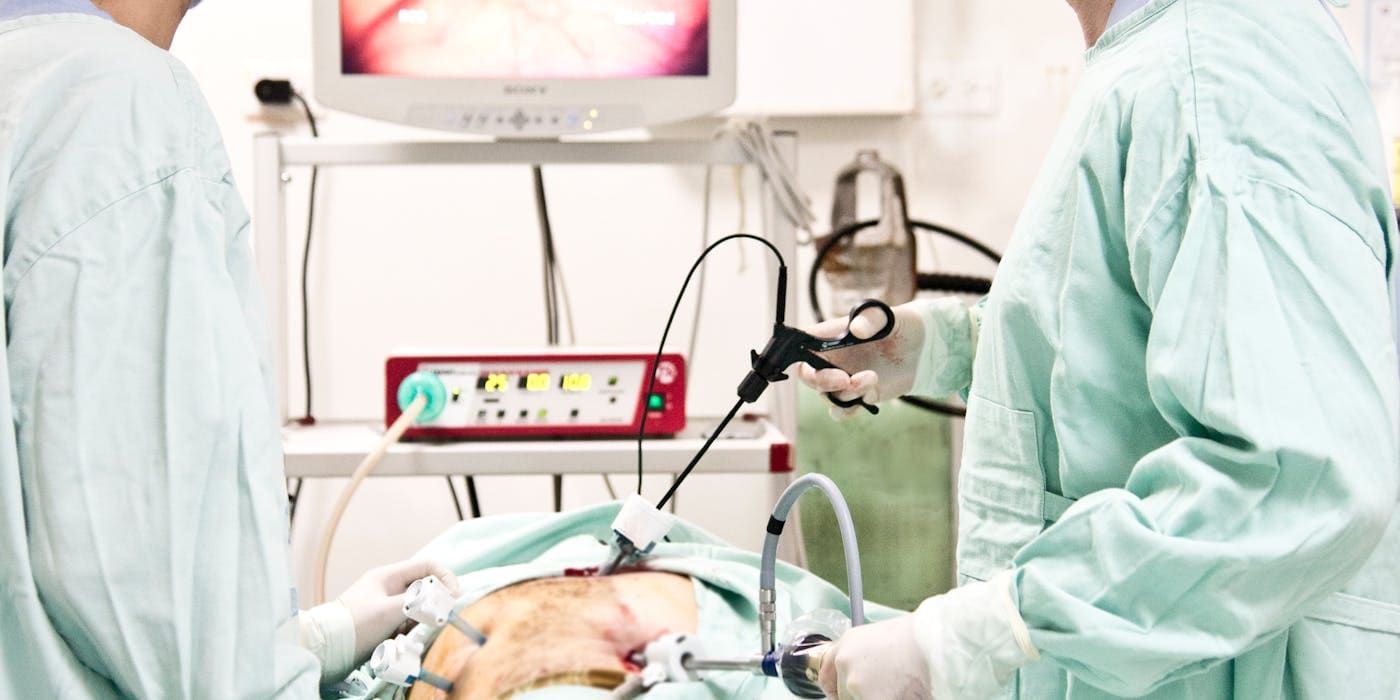
Minimally invasive neurosurgery (MIS) is not one operation — it is an approach applied across almost every corner of brain and spine surgery. Instead of a long incision and wide exposure to give the surgeon room to work, minimally invasive techniques use small incisions, tubular retractors, endoscopes, and high-definition cameras to reach the same target with far less disruption to the tissue around it. The destination — the tumour, the herniated disc, the compressed nerve — is the same. The route to get there is what changes.
On the spine, this means full endoscopic spine surgery and tubular microdiscectomy, where a working channel as small as 8mm is guided between muscle fibres instead of stripping them off the bone, and minimally invasive transforaminal fusion, where screws are placed through small stab incisions guided by X-ray rather than one long midline opening. On the brain, it means keyhole and supraorbital craniotomies for tumours and aneurysms that once required removing a large section of the skull, and endoscopic endonasal surgery, where pituitary tumours are removed entirely through the nose, with no scalp incision and no brain retraction at all.
Why does the size of the incision matter so much? Because most of the pain, blood loss, and recovery time after neurosurgery comes not from treating the target lesion itself but from the collateral damage of getting to it — cut muscle, retracted brain tissue, disrupted bone and ligament. Smaller access routes mean less muscle and soft tissue damage, less blood loss, a shorter hospital stay, less post-operative pain and pain-medication requirement, a lower infection risk, and a faster return to work and normal life — while the actual surgical goal (removing the tumour, decompressing the nerve, stabilising the spine) is achieved just as completely as with open surgery.
Dr. Waqas Mehdi is among the few neurosurgeons in Lahore trained across this full spectrum — full endoscopic and tubular spine surgery, endoscopic third ventriculostomy (ETV) for hydrocephalus, keyhole craniotomy for brain tumours, and endoscopic endonasal pituitary surgery — allowing him to recommend the least invasive option that will still achieve a complete, safe result for each individual patient at MidCity Hospital, Lahore.
Conditions Treated with Minimally Invasive Techniques
Minimally Invasive vs Open Surgery — What's the Real Difference?
Minimally Invasive Techniques Offered by Dr. Waqas Mehdi
Full Endoscopic Spine Surgery
Using an endoscope under 8mm in diameter, Dr. Waqas treats disc herniation, foraminal stenosis, and central canal stenosis through a keyhole incision, working between muscle fibres rather than cutting them. See the dedicated Endoscopic Spine Surgery page for the full range of endoscopic spinal procedures offered.
Endoscopic Discectomy (PELD)
Percutaneous Endoscopic Lumbar Discectomy is the most minimally invasive treatment for a herniated lumbar disc — a 7–8mm incision, direct HD visualisation of the compressed nerve, and same-day or next-day discharge. Read more on the Endoscopic Discectomy page.
Tubular Microdiscectomy
Disc herniation surgery performed through a small tubular retractor that gently spreads back muscles rather than cutting through them. Tiny incision, preserved back muscles, and typically same-day or next-day discharge.
Minimally Invasive Spinal Fusion
For degenerative spine conditions needing stabilisation, screws and rods are placed through small stab incisions guided by X-ray, avoiding the long midline muscle-stripping incision of traditional open fusion. Details on the Spinal Fusion Surgery page.
Keyhole / Supraorbital Craniotomy
Selected brain tumours, cysts, and some aneurysms can be approached through a small keyhole or eyebrow (supraorbital) incision rather than a large craniotomy, using endoscopes and microscopes to maintain full visualisation while reducing scalp and brain retraction. See the Brain Tumor Surgery page for candidacy and approach details.
Endoscopic Endonasal Pituitary Surgery
Pituitary tumours are removed entirely through the nostril using an endoscope, with no external incision and no brain retraction — the gold-standard approach for most pituitary adenomas. Read more on the Pituitary Tumor condition page.
Endoscopic Third Ventriculostomy (ETV)
Obstructive hydrocephalus is treated by creating a new CSF drainage pathway using a small neuroendoscope, avoiding or replacing a permanent VP shunt in eligible patients.
Vertebroplasty / Kyphoplasty
Percutaneous, needle-only stabilisation of painful vertebral compression fractures using bone cement — no incision at all, with rapid pain relief.
Recovery & Aftercare
Most minimally invasive spine procedures require only 24–48 hours in hospital; many endoscopic discectomies are same-day discharge.
Keyhole and endoscopic brain procedures typically require a slightly longer stay, but still well under that of comparable open craniotomy.
Patients can usually walk within hours of surgery, and post-operative pain is significantly less than with an equivalent open procedure.
Return to light work: roughly 1–2 weeks for spine procedures; 2–4 weeks for brain procedures, depending on the specific surgery and the patient's occupation.
Return to physical work, driving, or exercise is gradual and guided by Dr. Waqas based on the procedure performed.
Physiotherapy is still recommended after spine procedures for optimal long-term recovery, even though muscle disruption is minimal.
Recovery timelines are individual — some patients with multiple medical conditions or more extensive disease may need a longer, more cautious recovery plan.
Why Choose Dr. Waqas Mehdi?
- One of the few neurosurgeons in Lahore trained across the full spectrum of minimally invasive techniques — both brain and spine
- FCPS Neurosurgeon performing full endoscopic spine surgery, tubular microdiscectomy, and minimally invasive fusion
- Trained in keyhole/supraorbital craniotomy and endoscopic endonasal pituitary surgery for appropriate brain and skull-base cases
- Experienced in endoscopic third ventriculostomy (ETV) and neuroendoscopy for hydrocephalus
- Personally reviews every MRI/CT scan to determine whether a minimally invasive approach is truly suitable, rather than defaulting to one technique
- Patients treated at MidCity Hospital, Lahore benefit from shorter hospital stays and faster recovery without compromising the surgical outcome
Frequently Asked Questions
Is minimally invasive surgery always possible?
Does minimally invasive mean less effective?
What is the recovery time compared to open surgery?
Is minimally invasive brain surgery available in Pakistan?
How do I know if I'm a candidate for minimally invasive surgery?
Is minimally invasive neurosurgery available in Pakistan?
Am I a candidate for minimally invasive spine surgery?
How is minimally invasive surgery different from endoscopic surgery?
Book an Appointment
Consult Dr. Waqas Mehdi at MidCity Hospital, Lahore
0300-8482624042-35407131-6 Ext #282Related Services

Minimally Invasive Surgery – Available for Patients Across Pakistan
Dr. Waqas Mehdi, one of the best neurosurgeons in Lahore and Pakistan, provides expert minimally invasive surgery at MidCity Hospital and Mayo Hospital Lahore. Patients regularly travel from across Pakistan to consult him — including from:
Dr. Waqas Mehdi (MBBS, FCPS Neurosurgery) is Asst. Professor at King Edward Medical University (KEMU) and Consultant Neurosurgeon at Mayo Hospital, Lahore. His private OPD at MidCity Hospital, 3-A Main Jail Road, Lahore is open for consultations. Call 0300-8482624 or 042-35407131-6 Ext #282 to book an appointment.
Consult Dr. Waqas Mehdi Today
Pakistan's trusted neurosurgeon for brain tumor surgery, spine surgery, and all complex neurological conditions. Book your appointment at MidCity Hospital, Lahore.