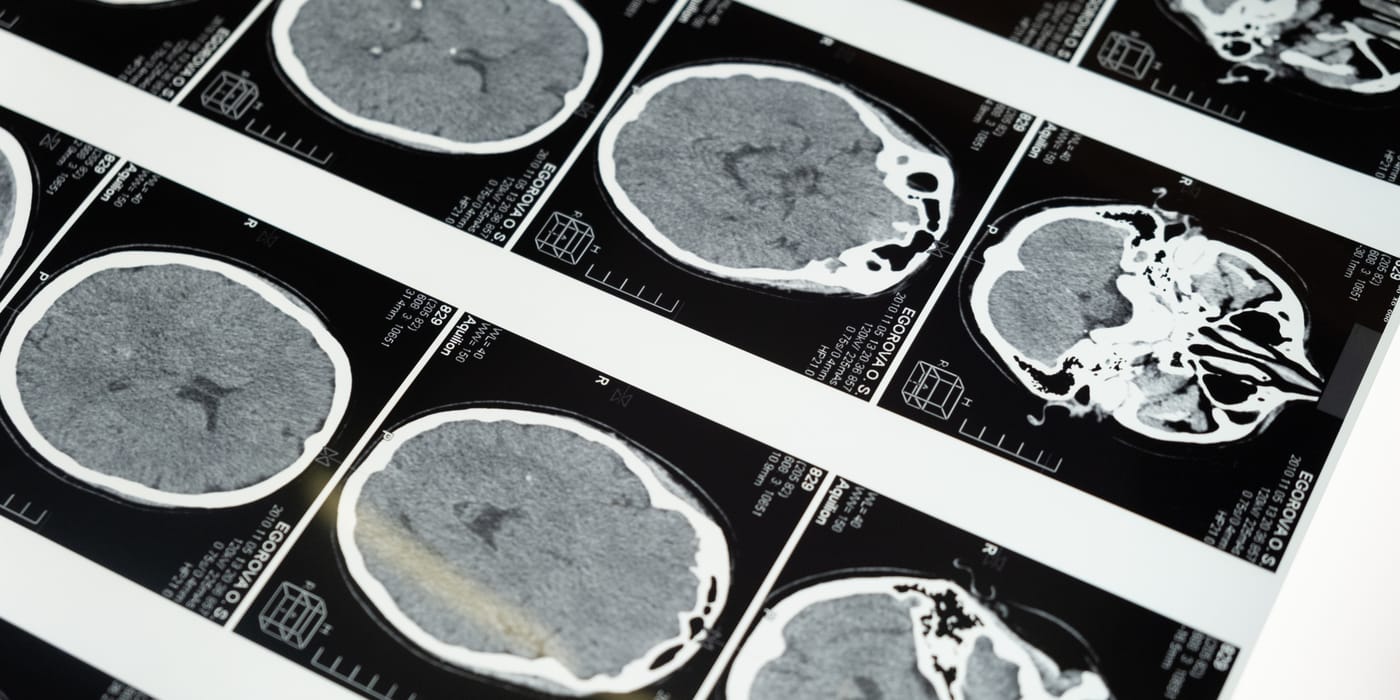
Brain Tumors
Expert patient guide to brain tumor types, warning signs, diagnosis and surgical treatment options in Lahore, Pakistan
What is a Brain Tumor?
A brain tumor is an abnormal mass of cells growing within the brain or the central spinal canal. Hearing the words "brain tumor" is understandably frightening, but a tumor is simply an abnormal growth of tissue — the term does not automatically mean cancer. This page is designed as a starting point: it covers what every patient needs to understand about brain tumors in general, and links out to dedicated pages for specific tumor types where more detail is available.
Brain tumors are generally described along two separate axes that often confuse patients: whether they are primary or metastatic (where the tumor cells originally came from), and whether they are benign or malignant (how the tumor cells behave). Understanding both distinctions is the key to understanding your own diagnosis, so we cover each in detail below.
⚠️ Warning Signs of a Brain Tumor
Is a Brain Tumor Always Cancer? Benign vs Malignant Explained
This is the single most common question patients ask after being told they have a brain tumor — and the answer, in most cases, is reassuring: no, a brain tumor is not always cancer.
Benign Brain Tumor
Made up of cells that grow slowly, do not invade surrounding brain tissue, and do not spread elsewhere in the body. Examples include meningiomas, pituitary adenomas, and acoustic neuromas. Many benign tumors can be completely removed with surgery and do not return. That said, a benign tumor can still be dangerous if it grows large enough, or is positioned in a location where it presses on critical structures like the optic nerves or brainstem — so "benign" does not mean "ignore it."
Malignant Brain Tumor
Grows more quickly, tends to invade surrounding normal brain tissue rather than staying neatly contained, and — in the case of metastatic tumors — has typically spread from cancer elsewhere in the body. Malignant primary brain tumors (such as high-grade gliomas) rarely spread outside the brain, but their tendency to infiltrate makes complete surgical removal more difficult. Treatment usually combines surgery with radiation and/or chemotherapy.
The only way to know for certain is through MRI characteristics combined, in most cases, with tissue diagnosis (biopsy or examination after surgical removal). Your neurosurgeon will explain what your scan and pathology report mean for your specific case.
Primary vs Metastatic (Secondary) Brain Tumors
The second key distinction is where the tumor originally came from.
Primary Brain Tumor
Arises directly from cells within the brain or its surrounding structures — for example, gliomas (from supporting brain cells), meningiomas (from the brain's covering membranes), or pituitary adenomas (from the pituitary gland). Primary brain tumors can be benign or malignant, but they generally do not spread to other organs in the body.
Metastatic (Secondary) Brain Tumor
Cancer cells that have travelled to the brain through the bloodstream from a cancer elsewhere in the body — most commonly lung cancer, breast cancer, kidney (renal cell) cancer, or melanoma (skin cancer). Metastatic tumors are, overall, the most common type of brain tumor seen in adults, more common than any single type of primary brain tumor.
This distinction changes the treatment approach: a primary brain tumor is typically managed by a neurosurgeon (with radiation/oncology support as needed), while a metastatic tumor requires close coordination with the medical oncologist managing the original cancer.
Common Types of Brain Tumors — An Overview
Below is a brief overview of the major brain tumor types. Where a dedicated in-depth page exists on this site, we've linked to it for readers who want more detail on that specific tumor.
The most common type of primary brain tumor, arising from the brain's supporting (glial) cells. Includes a wide spectrum from slow-growing low-grade astrocytomas to aggressive glioblastoma (GBM). Treatment and outlook vary hugely by grade — this is one of the most important reasons an individual assessment matters.
Arises from the meninges, the membranes covering the brain and spinal cord. The majority are benign and slow-growing, and many are curable with surgery alone.
Read more on Meningioma →A benign tumor of the pituitary gland at the base of the brain. Can affect hormone levels and, when large, press on the optic nerves and affect vision. Usually treated with endoscopic surgery through the nose.
Read more on Pituitary Tumor →A benign tumor of the balance/hearing nerve, typically causing gradual one-sided hearing loss, ringing in the ear (tinnitus), and balance problems. Slow-growing and often manageable with monitoring or surgery.
Cancer spreading to the brain from lung, breast, kidney, or skin (melanoma). The most common brain tumor type overall in adults, requiring coordinated care with an oncologist.
A malignant pediatric brain tumor arising in the cerebellum. Treated with a combination of surgery, radiation, and chemotherapy, usually at a specialized pediatric neuro-oncology center.
Two related conditions are often confused with a "brain tumor": a brain aneurysm is a bulge in a blood vessel wall, not a tumor, and a spinal cord tumor arises in or around the spinal cord rather than the brain.
Understanding WHO Brain Tumor Grading (Grade I–IV)
Once a brain tumor is examined under the microscope (usually after biopsy or surgery), it is assigned a grade from I to IV by the World Health Organization (WHO) classification system. This grade is one of the most important factors in predicting how a tumor is likely to behave and what treatment will be needed.
Slow-growing, close to normal cells. Often cured with surgery alone. Example: pilocytic astrocytoma.
Relatively slow-growing but can infiltrate surrounding brain tissue and may recur or progress over time. Requires close follow-up.
Malignant, actively growing tumor cells. Requires surgery combined with radiation and/or chemotherapy.
The most aggressive category, including glioblastoma (GBM). Requires maximal safe surgical removal followed by combined radiation and chemotherapy.
Grading applies mainly to gliomas and other primary brain tumors; meningiomas have their own I–III scale. Metastatic tumors are staged based on the original cancer instead.
Brain Tumor Symptoms by Location — Why They Vary So Much
Brain tumor symptoms depend heavily on where in the brain the tumor sits, not just its size or type — different regions control different functions, so identical-sized tumors in different areas can look completely different. This is why generic checklists ("headache, nausea, seizures") only tell part of the story.
Personality and behavior changes, poor judgment, difficulty concentrating, and sometimes weakness on one side of the body. Family members often notice these changes before the patient does.
Memory problems, seizures (often with strange smells, tastes, or déjà-vu sensations beforehand), and sometimes difficulty understanding or producing speech.
Visual disturbances — blind spots, loss of part of the visual field, or visual hallucinations, since this region processes vision.
Loss of balance and coordination, unsteady gait, clumsiness, and difficulty with fine movements — the cerebellum governs balance and coordinated movement.
Though tumors here are less common, they are especially concerning because the brainstem controls vital functions — breathing, heart rate, swallowing, and eye movements. Even small brainstem tumors can cause significant symptoms and require highly specialized surgical planning.
Hormonal disturbances and vision changes (especially peripheral vision loss), since this area sits near the optic nerves and pituitary gland.
How Is a Brain Tumor Diagnosed and Graded?
MRI brain with contrast is the gold standard for brain tumor diagnosis. It reveals tumor location, size, and characteristics that help predict whether a tumor is likely benign or malignant even before biopsy. Additional tests may include:
- CT scan (for emergency evaluation, or when MRI is not immediately available)
- MR Spectroscopy / Perfusion MRI (helps estimate tumor grade non-invasively)
- Biopsy or surgical tissue sampling (definitive diagnosis and WHO grading, guiding treatment planning)
- PET scan (particularly useful in suspected metastatic tumors, and to search for the original cancer source)
- Formal visual field and hormonal blood testing (for tumors near the pituitary/optic pathways)
Brain Tumor Surgery — Craniotomy, Keyhole, and Endoscopic Options
Treatment depends on tumor type, grade, location, and the patient's overall condition. Surgery remains the cornerstone of treatment for most brain tumors, and modern neurosurgery offers several approaches tailored to the tumor:
The traditional and most versatile approach — a section of skull is temporarily opened to access the tumor directly. Dr. Waqas Mehdi uses microsurgical techniques and intraoperative monitoring to maximize safe tumor removal while protecting brain function.
A smaller, precisely planned opening is used for tumors in accessible locations, reducing tissue disruption and often speeding recovery compared to a traditional large craniotomy.
Used specifically for pituitary tumors and some skull-base tumors — the tumor is reached through the nasal cavity with no external incision or brain retraction required.
Often used after surgery for malignant tumors to target remaining microscopic tumor cells, or as the primary treatment for tumors in locations unsuitable for surgery.
Used for malignant gliomas and metastatic tumors, typically combined with radiation and coordinated with an oncologist.
Small, asymptomatic, slow-growing benign tumors (such as small meningiomas or incidentally found pituitary microadenomas) may be safely monitored with serial MRI rather than immediate surgery.
For a deeper look at surgical techniques, recovery, and what to expect, see our dedicated Brain Tumor Surgery service page.
Frequently Asked Questions
Are all brain tumors fatal?
Can a brain tumor be removed completely?
How long can you live with a brain tumor without treatment?
What is the survival rate for brain tumor surgery?
Can a brain tumor come back after surgery?
Is brain tumor surgery risky?
Is a brain tumor always cancer?
What is the difference between a primary and a metastatic (secondary) brain tumor?
Get Expert Brain Tumor Consultation in Lahore
If you or a loved one has brain tumor symptoms, or has recently been told an MRI shows a mass, don't delay. Dr. Waqas Mehdi provides prompt, expert evaluation and surgical treatment.
Explore Specific Tumor Types
Consult Dr. Waqas Mehdi Today
Pakistan's trusted neurosurgeon for brain tumor surgery, spine surgery, and all complex neurological conditions. Book your appointment at MidCity Hospital, Lahore.