Slip Disc Treatment & Surgery in Lahore
A structured treatment pathway for lumbar and cervical slip disc — from conservative care and physiotherapy through to microdiscectomy and minimally invasive endoscopic (PELD) surgery.
Slip Disc: The Treatment Pathway
"Slip disc" is the term almost every patient in Pakistan uses at the clinic — it is the everyday name for what is medically called a herniated, prolapsed, or bulging intervertebral disc. It happens when the soft inner core (nucleus pulposus) of a spinal disc pushes out through a weakened or torn outer layer (annulus), and the protruding material presses on a nearby spinal nerve or the spinal cord itself.
For a deeper explanation of the anatomy, diagnosis, and patient education around this condition, see the dedicated condition page on herniated disc. This page instead focuses on how Dr. Waqas Mehdi actually treats slip disc — the step-by-step pathway a patient goes through from the first consultation to full recovery.
The reassuring reality is that the majority of slip disc cases do not need surgery at all. Dr. Waqas Mehdi follows a structured, stepwise approach: conservative management is tried first and given a genuine fair trial wherever it is safe to do so; targeted injections are considered next for persistent pain; and surgery — usually the least invasive option suitable for the specific disc herniation — is reserved for cases where conservative care has failed, or where red-flag symptoms make it unsafe to wait.
This same pathway applies whether the slip disc is in the lower back (lumbar spine, most common) or the neck (cervical spine). What differs is the pattern of symptoms and, at the surgical end, the specific technique used.
Slip Disc Symptoms: Lumbar vs Cervical
What Causes a Slip Disc
Slip Disc Surgery in Lahore — The Full Treatment Ladder
Step 1: Conservative Care (First Line for Most Patients)
Short-term activity modification — not the strict bed rest once advised, which is now known to be counterproductive and can delay recovery by weakening core and back muscles. Instead, patients are guided to stay reasonably active within pain limits, alongside structured physiotherapy (core stabilisation, nerve-gliding and stretching exercises), and anti-inflammatory medication (NSAIDs) for symptom control. Most patients improve significantly within 6-12 weeks on this pathway alone.
Step 2: Epidural Steroid Injection
For patients whose leg or arm pain remains significant despite several weeks of conservative treatment, an image-guided epidural steroid injection delivers anti-inflammatory medication directly around the compressed nerve root. This can provide substantial relief for weeks to months, often enough to let physiotherapy and natural healing take over, and sometimes avoids surgery altogether.
Step 3: Microdiscectomy
When conservative treatment and injections have not resolved significant pain, weakness, or nerve symptoms, microdiscectomy is the well-established, gold-standard surgical option. Performed under an operating microscope through a small 2-3 cm incision, only the herniated disc fragment compressing the nerve is removed. Success rates for relieving leg or arm pain are around 90% or higher in appropriately selected patients. Read more on the dedicated microdiscectomy page.
Step 4: Full Endoscopic Discectomy (PELD)
For suitable disc herniations, Dr. Waqas Mehdi's preferred minimally invasive option is full endoscopic lumbar discectomy (also called PELD — percutaneous endoscopic lumbar discectomy), performed through a single incision of around 7mm using a specialised endoscope. This causes minimal disruption to surrounding muscle, typically less post-operative pain, and often same-day or next-day discharge. See endoscopic discectomy and endoscopic spine surgery for full detail on how these techniques compare and who is a candidate.
Step 5: Spinal Fusion (When Instability Is Present)
In a minority of cases, a slip disc is accompanied by underlying spinal instability — for example, significant degenerative slippage (spondylolisthesis) alongside the disc herniation, or a level that has already been operated on and re-herniated. In these specific situations, simple discectomy alone may not be enough, and spinal fusion surgery may be recommended to stabilise the segment in addition to decompressing the nerve. This is not needed for the great majority of straightforward slip disc cases.
Recovery & Aftercare
Conservative treatment: most patients notice steady improvement over 2-6 weeks of physiotherapy and activity modification, with continued gains up to 12 weeks. Staying gently active — walking, avoiding prolonged sitting — supports recovery far better than strict bed rest.
Epidural steroid injection: relief is often felt within days, and the effect typically lasts weeks to several months, giving a valuable window to progress physiotherapy and, in many cases, avoid surgery entirely.
Microdiscectomy: most patients walk the same day or the next day, with a hospital stay of around 1-2 days. Return to desk-based work is typically 2-4 weeks, and to manual or physical work 6-8 weeks, with bending, twisting, and heavy lifting avoided in the initial 4-6 weeks.
Full endoscopic discectomy (PELD): because muscle disruption is minimal, recovery is often quicker still, with many patients mobilising within hours and returning to light activity sooner than with standard microdiscectomy — the exact timeline is confirmed individually based on the procedure performed.
Spinal fusion (where required): recovery is longer, generally several weeks to a few months, as the fused segment needs time to consolidate; this is discussed in detail only for the small subset of patients where fusion is actually indicated.
Across all surgical tiers, a structured physiotherapy programme starting around 4-6 weeks after surgery to strengthen core and back-supporting muscles is central to preventing recurrence and protecting the adjacent disc levels long-term.
Why Choose Dr. Waqas Mehdi?
- Follows a genuine stepwise treatment ladder — surgery is never offered as a first option, only after conservative care has had a fair trial where it is safe to do so
- Offers the full range of options under one roof: physiotherapy-led conservative care, epidural injections, microdiscectomy, full endoscopic discectomy (PELD), and fusion when truly needed
- Prefers the least invasive technique suited to each specific disc herniation rather than defaulting to a single standard operation
- Personally reviews every MRI and explains exactly which nerve is affected, why, and what that means for the recommended treatment step
- Trained and experienced in minimally invasive and endoscopic spine techniques, in addition to standard microsurgical approaches
- Available for consultation at MidCity Hospital, Lahore, with patients travelling from across Pakistan for his opinion on slip disc treatment
Frequently Asked Questions
Can slip disc be cured without operation?
What exercises should be avoided with a slip disc?
Is slip disc surgery permanent — does it come back?
How much rest is needed after slip disc surgery?
What is the cost of slip disc surgery in Lahore?
How do I know if my slip disc needs surgery or not?
What is the difference between a slip disc in the neck and in the lower back?
Can slip disc happen again after treatment even without surgery?
Book an Appointment
Consult Dr. Waqas Mehdi at MidCity Hospital, Lahore
0300-8482624042-35407131-6 Ext #282Related Services

Slip Disc Treatment – Available for Patients Across Pakistan
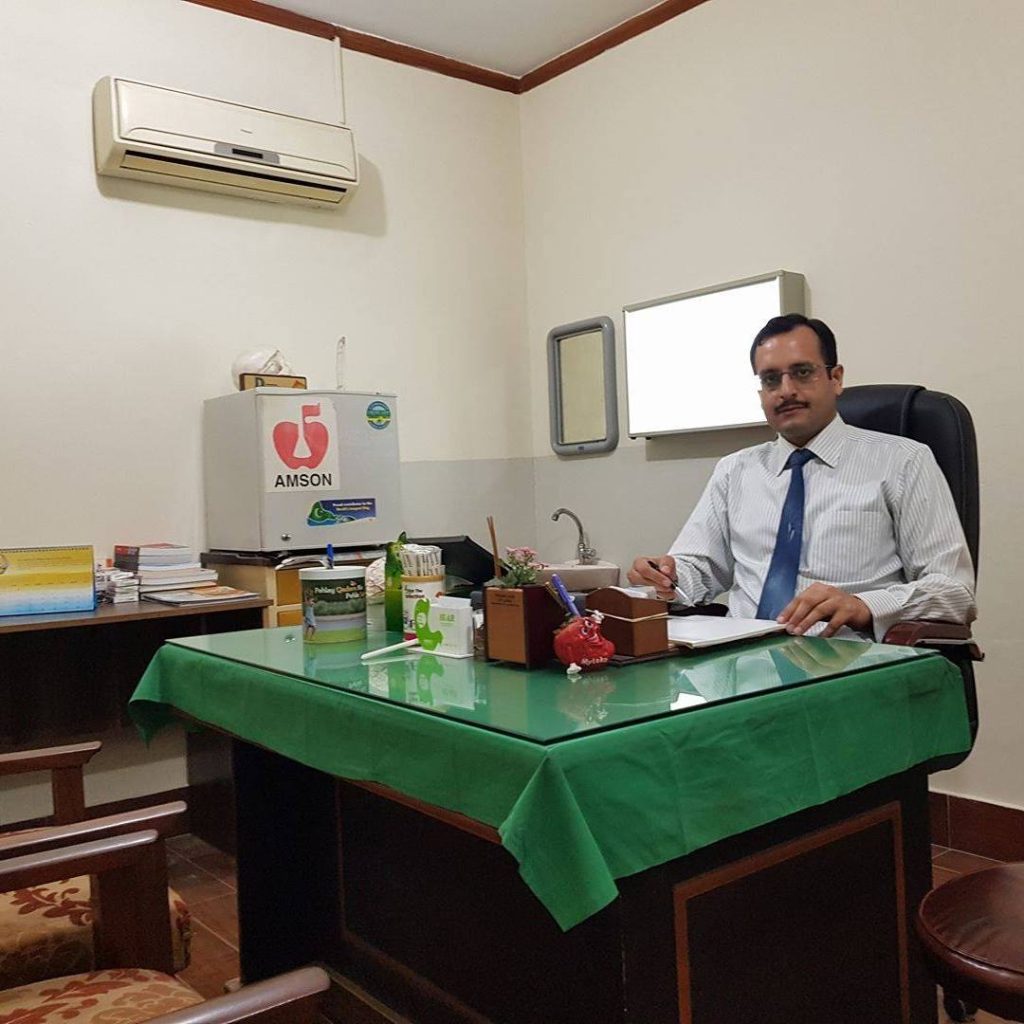
Dr. Waqas Mehdi, one of the best neurosurgeons in Lahore and Pakistan, provides expert slip disc treatment at MidCity Hospital and Mayo Hospital Lahore. Patients regularly travel from across Pakistan to consult him — including from:
Dr. Waqas Mehdi (MBBS, FCPS Neurosurgery) is Asst. Professor at King Edward Medical University (KEMU) and Consultant Neurosurgeon at Mayo Hospital, Lahore. His private OPD at MidCity Hospital, 3-A Main Jail Road, Lahore is open for consultations. Call 0300-8482624 or 042-35407131-6 Ext #282 to book an appointment.
Consult Dr. Waqas Mehdi Today
Pakistan's trusted neurosurgeon for brain tumor surgery, spine surgery, and all complex neurological conditions. Book your appointment at MidCity Hospital, Lahore.