Slip disc — medically known as herniated disc or disc prolapse — is one of the most common causes of disabling back pain and sciatica in Pakistan. Dr. Waqas Mehdi, FCPS Neurosurgeon and Asst. Professor at King Edward Medical University (KEMU), Lahore, sees dozens of slip disc patients weekly at MidCity Hospital. The most frequent question: "Do I need surgery, or can I manage without it?" This guide gives you a clear, evidence-based answer.
What is a Slip Disc? Understanding the Anatomy
Each spinal disc is like a shock absorber — a tough outer ring (annulus fibrosus) with a soft gel-like centre (nucleus pulposus). A slip disc occurs when the soft centre pushes through a tear in the outer ring and presses on a nearby nerve root. This causes the characteristic radiating pain from the lower back down the leg (sciatica) or from the neck down the arm.
In Pakistan, the most commonly affected levels are L4-L5 and L5-S1 in the lumbar spine (causing leg pain and sciatica), and C5-C6 and C6-C7 in the cervical spine (causing arm pain and numbness). Risk factors include prolonged sitting, heavy manual work, poor posture, obesity, and — increasingly — desk-bound office jobs in Lahore and other cities.

Slip Disc Symptoms — How to Recognise It
The hallmark symptom is pain that radiates from the spine into a limb — not just local back or neck pain. In lumbar disc herniation, pain travels from the lower back through the buttock and down one leg (sciatica). In cervical disc herniation, pain and tingling shoot from the neck into the shoulder, arm, or hand.
- Burning, shooting, or electric pain radiating down the leg or arm
- Numbness or pins-and-needles in the foot, calf, or toes (lumbar) — or hand and fingers (cervical)
- Weakness in the leg, foot drop, or difficulty gripping (cervical)
- Pain that worsens with sitting, coughing, or sneezing
- Pain that is better when lying flat or walking slowly
- In severe cases: loss of bladder or bowel control (EMERGENCY — see below)
EMERGENCY: If your slip disc causes loss of bladder or bowel control, saddle numbness (numbness in the inner thighs), or rapid weakness in both legs — this is Cauda Equina Syndrome. Call Dr. Waqas Mehdi immediately on 0300-8482624 or go to the nearest hospital emergency. This requires surgery within hours to prevent permanent paralysis.
Diagnosis: What Tests Do You Need?
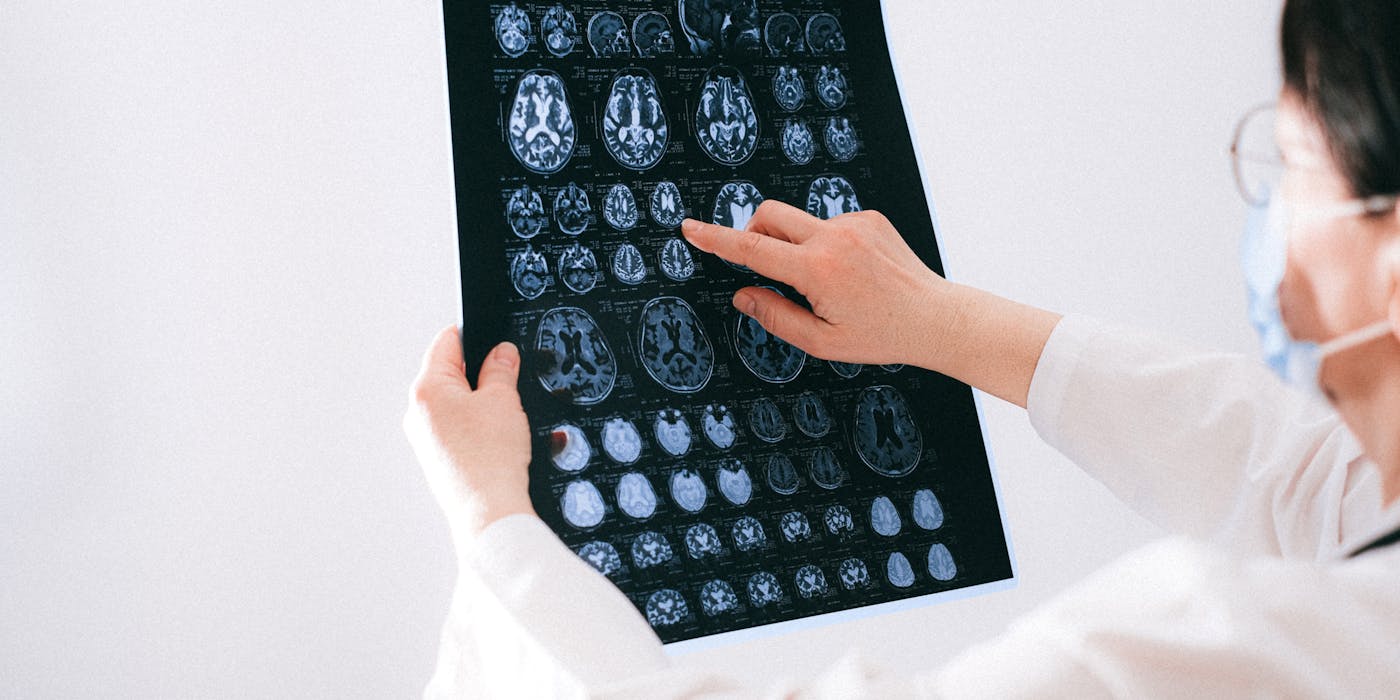
MRI of the spine (without contrast) is the gold standard for diagnosing slip disc. It shows the disc herniation, the affected nerve root, and the degree of compression. X-rays only show bones and are not sufficient. CT scan is useful in specific situations. Dr. Waqas Mehdi reviews MRI films personally and correlates them with the patient's clinical examination — both must match before surgery is considered.
Conservative (Non-Surgical) Treatment — Try This First
The excellent news: 80–90% of slip disc patients improve significantly with conservative treatment alone within 6–12 weeks. The herniated disc material gradually shrinks as the body reabsorbs it, and nerve inflammation settles with time and treatment.
- Relative rest — avoid prolonged sitting, heavy lifting, and bending. Short walks are encouraged.
- Medications — NSAIDs (ibuprofen, diclofenac), muscle relaxants, nerve pain agents (gabapentin, pregabalin)
- Physiotherapy — McKenzie extension exercises, core strengthening, postural correction. Available at major hospitals in Lahore.
- Epidural steroid injection — a targeted anti-inflammatory injection near the compressed nerve root, performed by Dr. Waqas Mehdi under X-ray guidance. Provides significant relief in 60–70% of patients and can avoid surgery.
- Heat and cold therapy, TENS, ultrasound therapy
- Activity modification — ergonomic chair, lumbar support, avoiding driving for long periods
When Does Slip Disc Need Surgery? — 4 Clear Indications
Surgery is NOT the first option — but there are clear situations where it becomes necessary or strongly advisable:
- 1. Cauda Equina Syndrome — emergency surgery within hours. Bladder/bowel dysfunction with saddle numbness.
- 2. Rapidly progressive neurological deficit — foot drop, worsening leg weakness within days. Surgery within 48–72 hours prevents permanent nerve damage.
- 3. Failed conservative treatment — severe, debilitating sciatica that has not improved after 6–12 weeks of proper physiotherapy, medications, and epidural injections.
- 4. Recurrent episodes — patients who have had multiple severe episodes disrupting work and quality of life.
Microdiscectomy Surgery in Lahore — What to Expect
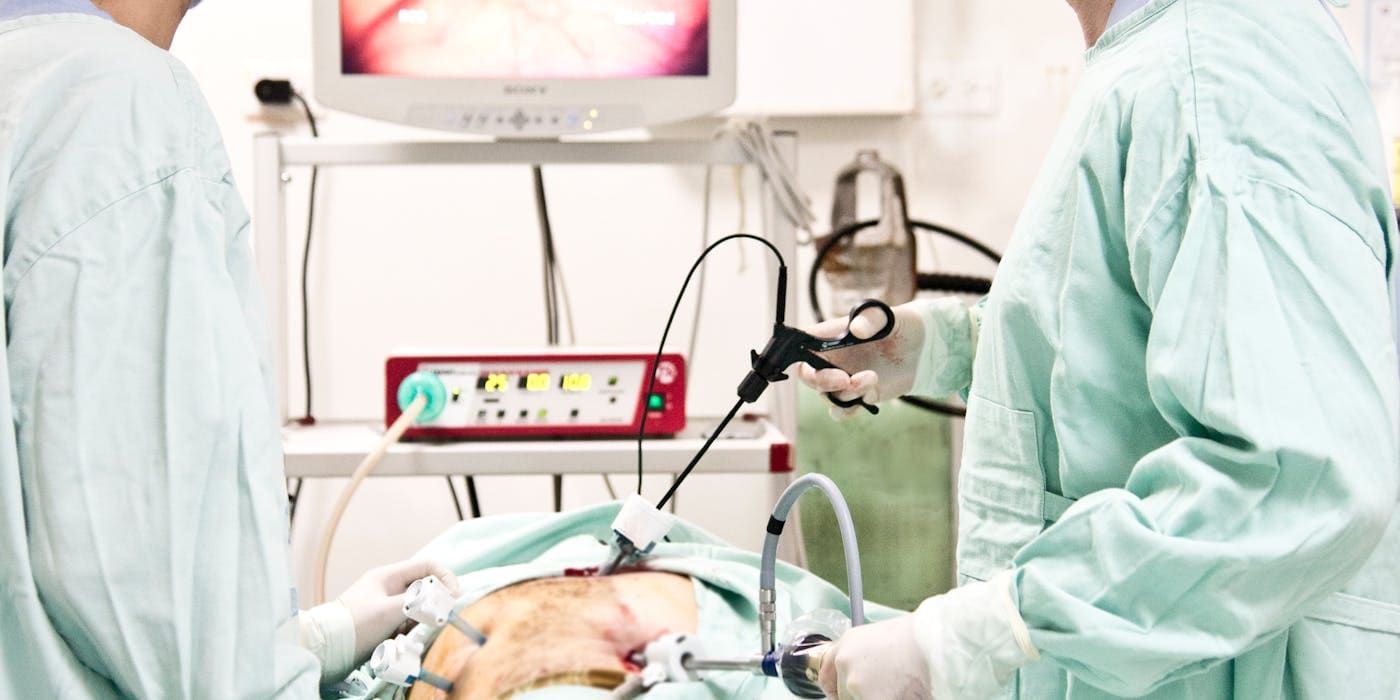
Dr. Waqas Mehdi performs microdiscectomy — the gold standard surgical procedure for lumbar slip disc — at MidCity Hospital, Lahore. It is a minimally invasive procedure using a surgical microscope.
- Incision: 2–3 cm, through a small opening in the back muscles
- Procedure: The herniated disc fragment pressing on the nerve is precisely removed under the microscope
- Duration: 60–90 minutes under general anaesthesia
- Hospital stay: 1–2 days
- Pain relief: Usually immediate and dramatic — most patients notice sciatica gone or dramatically reduced on waking from anaesthesia
- Return to office work: 2–3 weeks. Manual work: 6–8 weeks
Full Endoscopic Disc Surgery — The Most Minimally Invasive Option
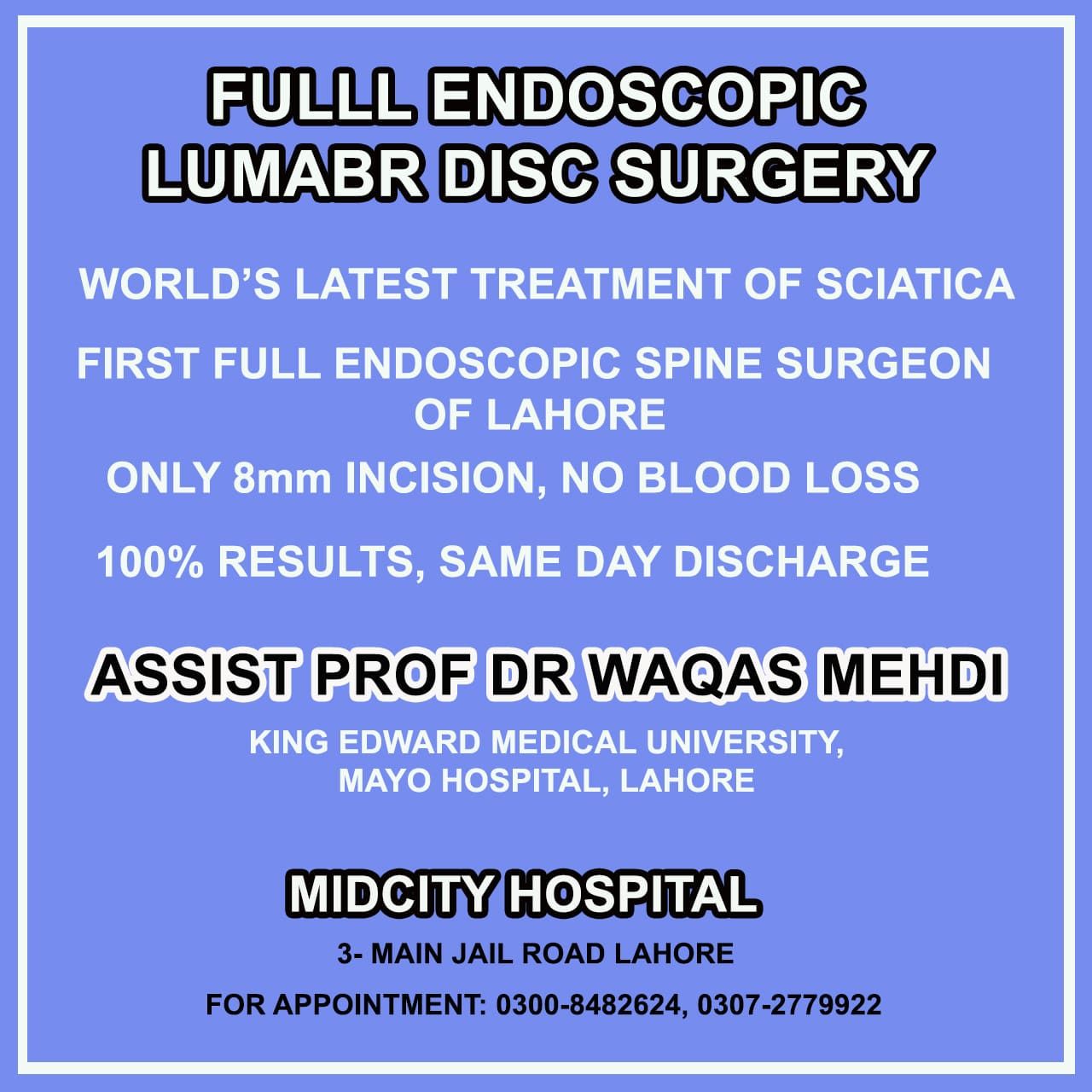
For suitable patients, Dr. Waqas Mehdi offers full endoscopic discectomy — an even less invasive approach using a pencil-sized endoscope through a 7mm incision. Benefits include day-case surgery (no overnight stay), minimal muscle damage, return to light activity in 1 week, and minimal blood loss. Not all disc herniations are suitable — Dr. Waqas will advise at consultation whether you are a candidate.
Slip Disc Surgery Cost in Lahore, Pakistan
Surgery cost varies depending on anaesthesia, implants (if any), and duration of stay. At MidCity Hospital Lahore, Dr. Waqas Mehdi's team can provide a full cost estimate after reviewing your MRI. Call 0300-8482624 to discuss your case.
Why Choose Dr. Waqas Mehdi for Slip Disc Treatment in Lahore?
- FCPS Neurosurgery (CPSP) — the highest neurosurgical qualification in Pakistan
- Assistant Professor, Dept. of Neurosurgery, King Edward Medical University (KEMU)
- Consultant Neurosurgeon, Mayo Hospital Lahore — Pakistan's largest teaching hospital
- Trained in full endoscopic spine surgery and minimally invasive techniques
- Sees patients at MidCity Hospital, 3-A Main Jail Road, Lahore (Private OPD: 6–8 PM daily)
- Patients travel from Karachi, Islamabad, Multan, Faisalabad, Peshawar for his expertise
Slip disc is treatable — with or without surgery. The key is accurate diagnosis and the right treatment decision. Dr. Waqas Mehdi evaluates each patient's symptoms, clinical examination, and MRI together before recommending a plan. If you have been suffering from back pain, sciatica, or leg numbness in Lahore or anywhere in Pakistan — book your consultation today. Call: 0300-8482624 or visit MidCity Hospital, 3-A Main Jail Road, Lahore.
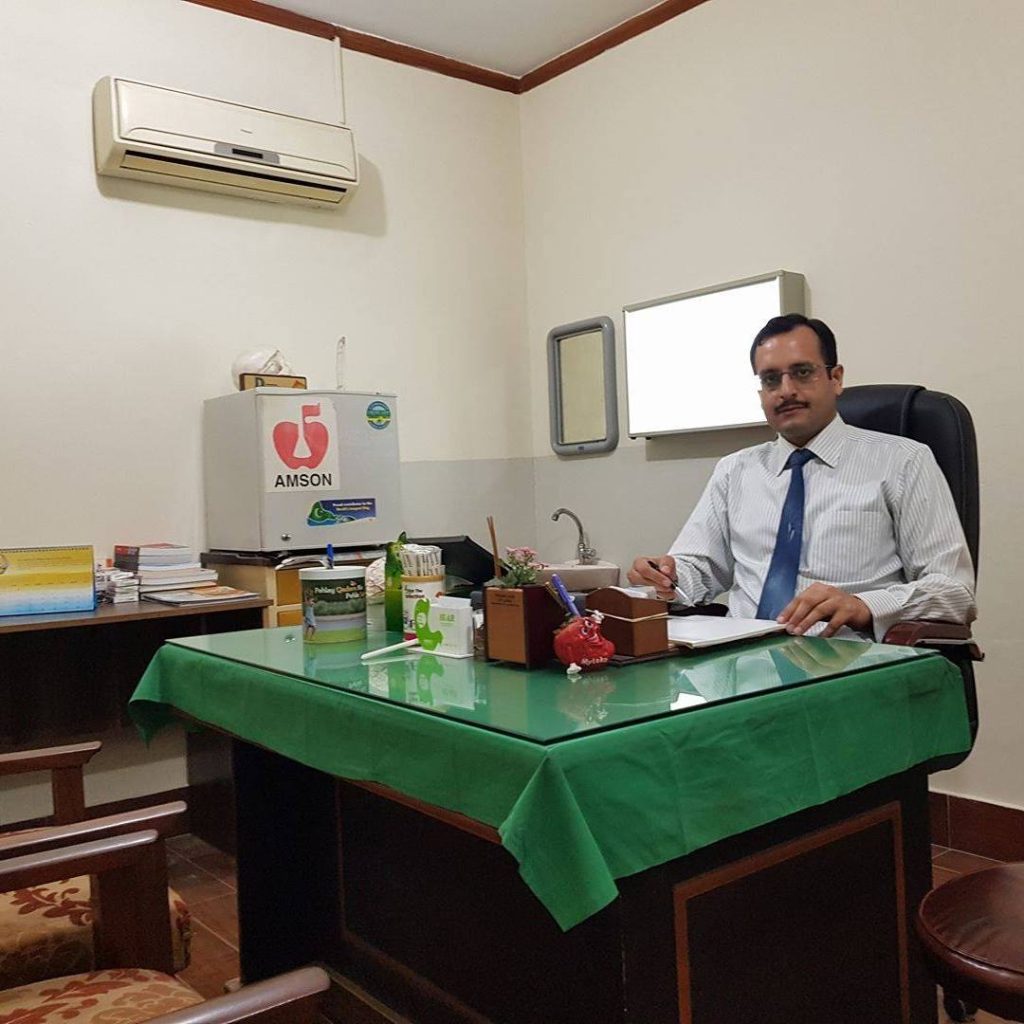
Dr. Waqas Mehdi is one of Pakistan's leading neurosurgeons, practicing at MidCity Hospital and Mayo Hospital Lahore. He specializes in brain tumors, spine surgery, and minimally invasive neurosurgery.
View Full Profile →